

TL;DR
- Repeatedly deciding to stop and not stopping is the ordinary pattern, not evidence of a weak character.
- Research on problematic use finds that sexual cues capture attention and drive anticipation before deliberation gets involved. You are usually not losing an argument — you are arriving after it finished.
- One 2026 study found that the association between cue and reward persisted for pornographic cues after other reward associations had faded.
- This is why changing your environment outperforms strengthening your intention.
- Some people repeatedly "fail" because they are not dysregulated at all — they are in conflict with their own values, which is a different problem with a different answer.
- Willpower still matters. It is just better spent on decisions made in advance than on decisions made at 1am.
The short answer
You decided to stop. You meant it. Then, at some point that probably did not feel like a decision at all, you were doing it again.
The usual conclusion is that you did not want it enough. That conclusion is almost always wrong, and it is worth understanding why before you try again with the same method and get the same result.
Willpower is being asked to do a job it is badly positioned for. You make the decision to stop while calm, rested and clear-headed. The decision that overturns it gets made in a completely different state — late, tired, alone, with the thing one tap away. Those are not the same person negotiating twice. The second one has better position.
What the evidence actually shows
A 2026 interdisciplinary review of compulsive sexual behaviour and problematic pornography use — assembled by many of the researchers who built this field — describes findings that recur across studies of people with problematic use:
- heightened cue reactivity in reward-related regions during exposure to sexual cues
- attentional prioritisation of sexual cues, found across several different experimental paradigms
- altered connectivity between reward circuitry and the regions involved in control
Read the second one again, because it is the important one. Attentional prioritisation means the cue gets to you before you get to it. By the time deliberation arrives — the part of you that made the decision on Sunday — attention has already moved and anticipation has already started.
The mechanism researchers work with here is a shift from hedonic "liking" toward incentive "wanting," drawn from incentive-salience theory. The review presents it as a proposed mechanism still being tested, not as settled fact. But the practical implication holds regardless of how that debate resolves: wanting something and enjoying it are separable, which is why the pattern often survives long after it stopped being enjoyable.
Why it comes back after you thought it was done
A 2026 fMRI study by Kampa and colleagues looked at what happens to these associations over time. Fifty-eight heterosexual men in Germany — 35 non-problematic users, 23 problematic — learned to associate neutral shapes with pornographic, gaming or monetary rewards. Those associations were then extinguished. About a week later, everyone was retested.
In the problematic group, the altered responses at extinction and recall "were limited to the CS+porn." The associations with gaming and money faded as expected. The one attached to pornographic cues did not.
That is a small study, and its authors say so plainly: they under-recruited, everyone was male, and the problematic users "were not diagnosed with a compulsive sexual behavior disorder according to ICD 11." Treat it as one result pointing somewhere, not proof.
But if something like that is happening, it explains an experience nearly everyone in this position reports: three good weeks, genuine confidence that it is behind you, and then a cue you did not plan for and it is all immediately available again. Nothing was lost. The association was simply still there, waiting for its cue.
That is not backsliding. It is how durable learning behaves.
This is not a verdict on your character
Two things follow from the above, and both are worth sitting with.
Repeated failure is the expected output of the method, not a measure of you. If the decisive moment happens before deliberation engages, then a plan that consists entirely of deliberating harder next time is a plan to lose in the same place. Running it ten times and losing ten times tells you about the plan.
Nobody has shown that pornography caused this. The 2026 review is explicit that these models "have been evaluated almost exclusively using cross-sectional data, which limits inferences about temporal ordering, developmental sequencing, and causal mechanisms," and that longitudinal data is "severely lacking." Whether heavy use produced a more reactive reward system, or a more reactive system produced heavier use, or something else produced both, is unknown. What porn does to your brain goes through that evidence and its limits in full.
You do not need that question settled to act. You only need to stop treating the outcome as a character report.
One possibility worth ruling out first
Before you build a recovery plan, check that you need the plan you think you need.
The research now separates two routes to the same feeling of being out of control: genuinely dysregulated use, and use that conflicts with your moral values — what researchers call moral incongruence. From the inside, both produce "I cannot stop and I hate this."
They are not the same, and the outcomes differ. In the review's summary, "individuals reporting moral disapproval in the absence of PPU reported more favorable scores across pornography-related, sexuality-related, and psychological dimensions," while "co-occurring PPU may be a more robust predictor of poorer mental health outcomes than moral incongruence alone." The reviewers consider the distinction important enough that they warn it needs catching in screening "to avoid CSBD misdiagnosis."
So it is worth asking honestly which describes you. Are you continuing despite real consequences, escalating time or intensity, and failing at genuine attempts to stop? Or are you doing something at a frequency that is not damaging your life, which you believe is wrong, and suffering for that reason?
Both are real distress. Only the first is the problem this page is about, and treating the second as an addiction tends to make it worse — more shame, more secrecy, more of the conditions the behaviour feeds on. Our guide to porn addiction signs covers how clinicians draw that line.
What actually works
The principle is simple to state and unintuitive to accept: stop trying to win the moment, and start removing the moment.
Four things follow from the evidence above. HAJR is built around them, so this section doubles as an explanation of why the app is shaped the way it is.
1. The safeguard has to already be running
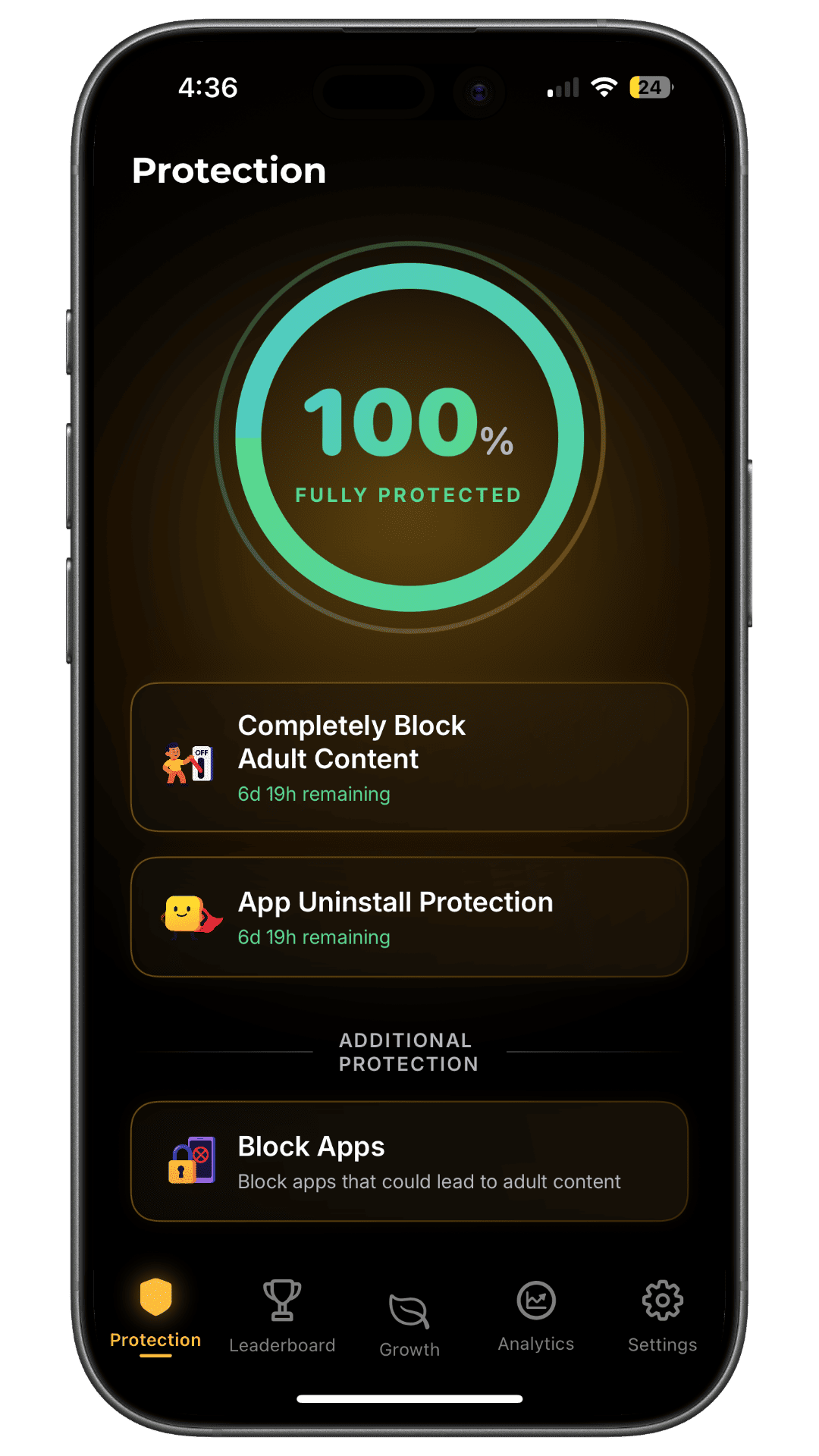
If attention is captured before deliberation engages, a protection you have to summon in the moment is a protection that arrives late. It needs to be on before the cue appears.
That is what one-click porn blocking is for: one tap blocks adult sites across the browsers on your iPhone, and it stays locked for the period you choose. The decision gets made on Sunday afternoon and is simply already in force on Tuesday night. Nothing has to be remembered, summoned or won.
2. Your later self must not be able to renegotiate
This is precommitment, and the evidence for the general principle is encouraging rather than conclusive. A systematic review of commitment-making across ten trials and 1,320 participants found modest benefits — around 1.5 kg greater short-term weight loss — with commitments working better when made publicly. Effects were inconsistent across domains, and the authors caution the results "must be interpreted with caution given the complexity and heterogeneity of the interventions, and the identified level of bias." That is weight-loss research, not pornography. Treat it as a reason to use precommitment, not a promise about your outcome.
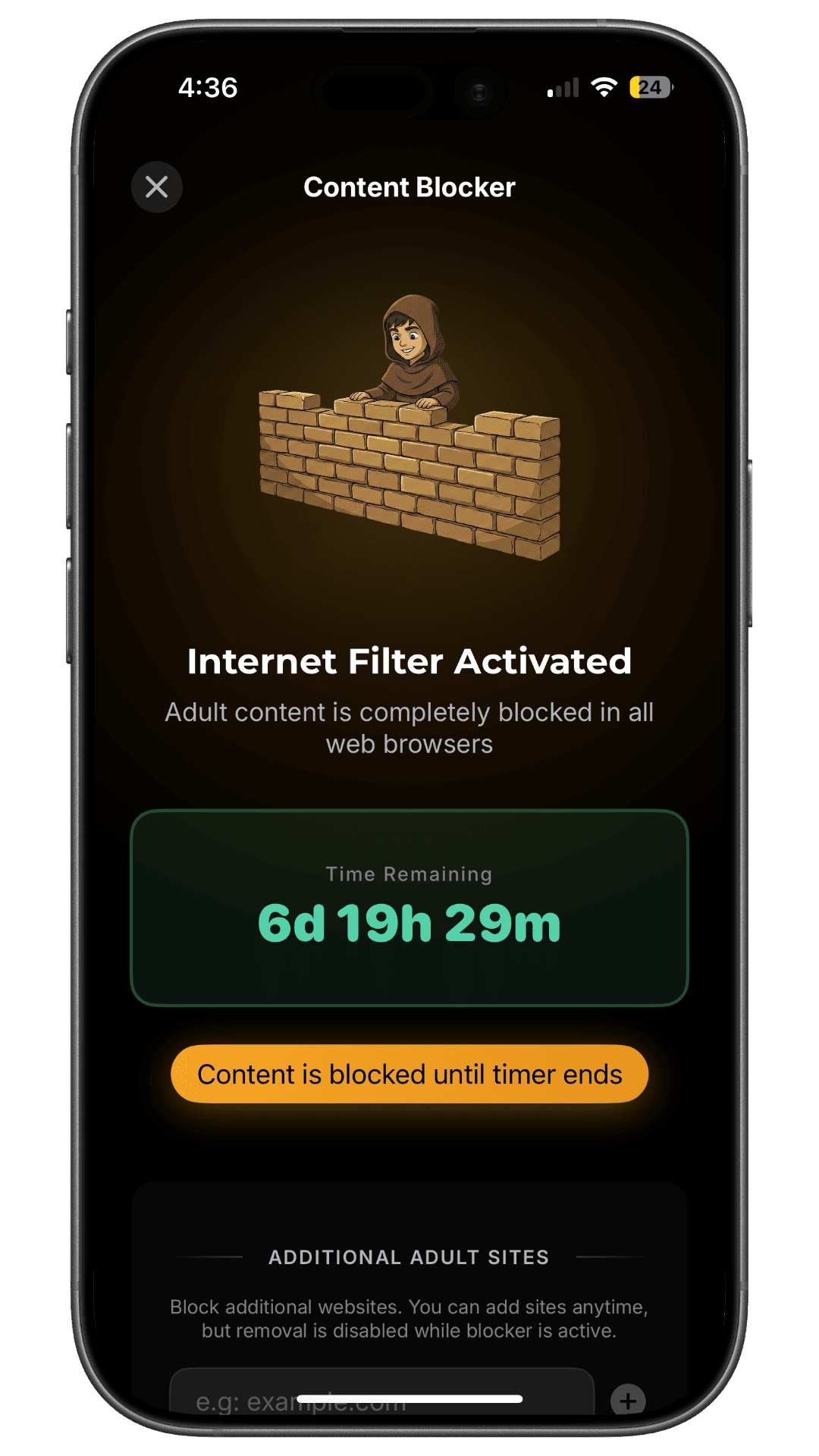
The practical version is unforgiving: a blocker you can switch off during an urge is a blocker you will switch off during an urge. Nearly nobody defeats a blocker — they delete it, in four seconds.
App uninstall protection removes the option to delete HAJR from your iPhone while it is running. The filter cannot be switched off early either. Both end on their own when your timer does, and while they are active you can only strengthen the configuration — new trigger sites can be added at any time, but removing them waits for the timer. Every move available to you points where you already said you wanted to go.
3. Cues are not only on porn sites, and not only on your phone
If the mechanism is cue capture, then the intervention with leverage sits upstream of the capture — the feeds, the apps and the machines, not just the destination sites.
On iPhone, trigger-app and site blocking covers the apps that actually route you there. Social feeds surface the same material inside apps a web filter never sees, so blocking websites while leaving those apps open is the most common hole in an otherwise sound setup.
Desktop is the other half, and it is the half most people leave open. The free HAJR Chrome extension blocks known adult sites, takes your own trigger sites, checks and blurs explicit images locally on your own machine, and turns off short-form feeds — Shorts, Reels, TikTok — which are cue delivery systems whether or not they are pornographic. If you have ever quit successfully on your phone and then run into it on a laptop, this is the gap that did it.
4. Measure behaviour, not days
A streak counter turns one evening into the loss of everything before it, which is both false and the most reliable route back into the pattern.
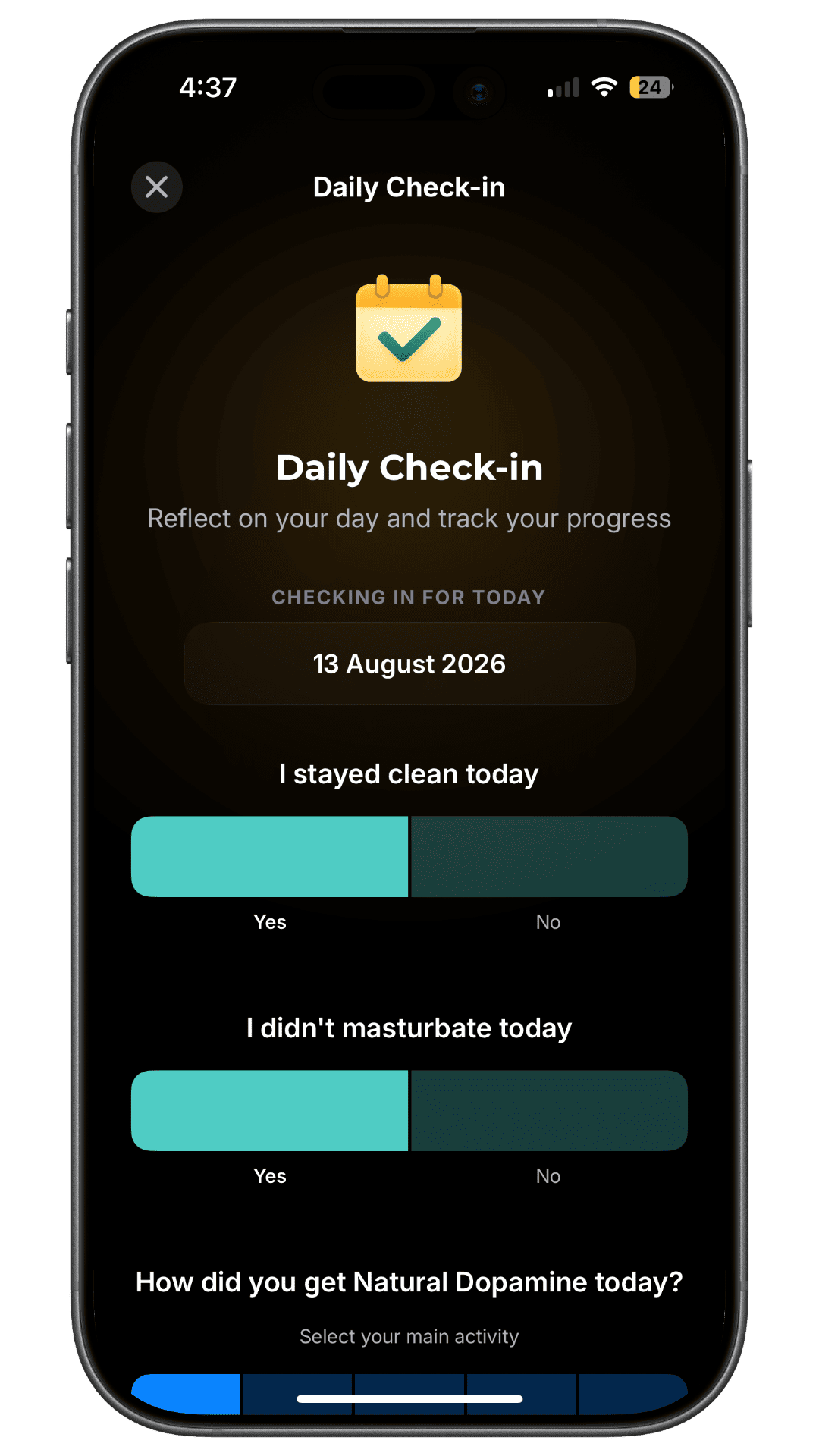
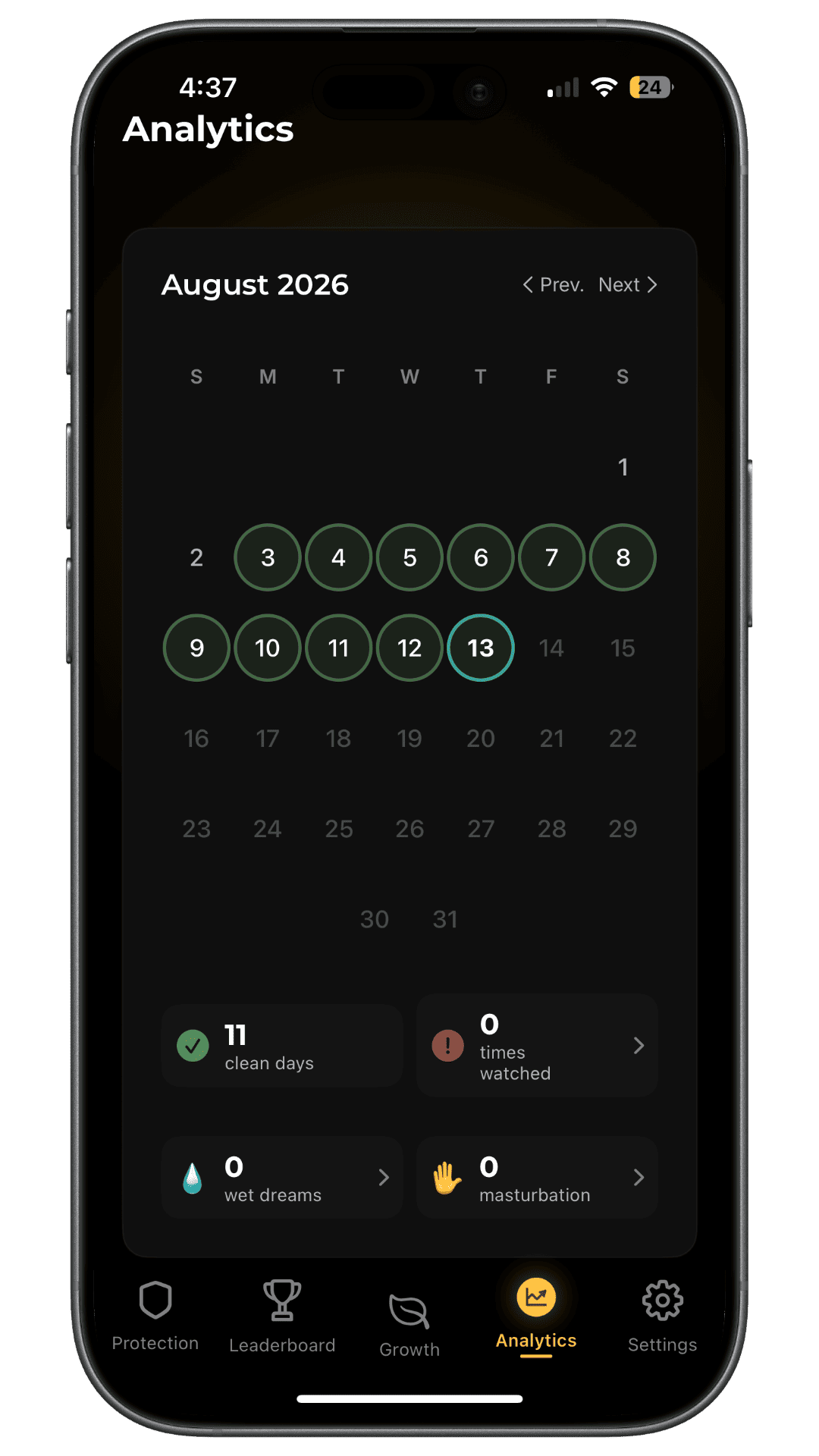
Daily check-ins ask what actually happened rather than scoring you. Your private calendar and history let you see the pattern — which days, which conditions, which hours — so that next time you are adjusting a real trigger rather than guessing. The growth journey counts the days you showed up, which is the part that is genuinely yours and the part a relapse does not erase.
None of it is reported to anyone. HAJR is self-directed: no screenshots, no browsing reports to a partner or an accountability service. That matters here specifically, because the usual alternative to willpower in this category is surveillance, and being watched is a different mechanism with different costs.
And the conditions around all of it
Unstructured time, isolation, poor sleep and late nights show up repeatedly around a return to use. No app fixes those. Adjusting them is less heroic than resolving harder, and it works better.
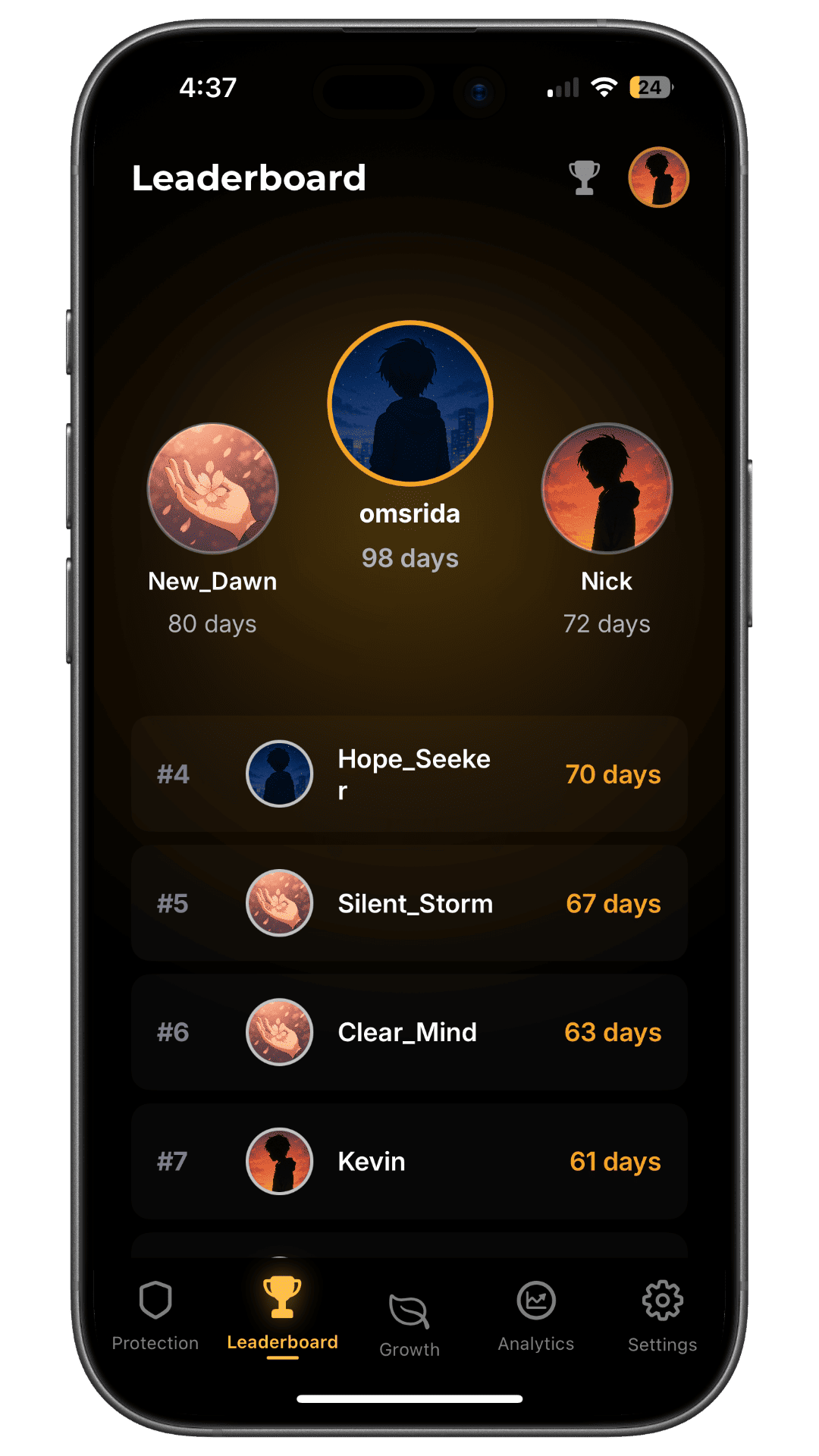
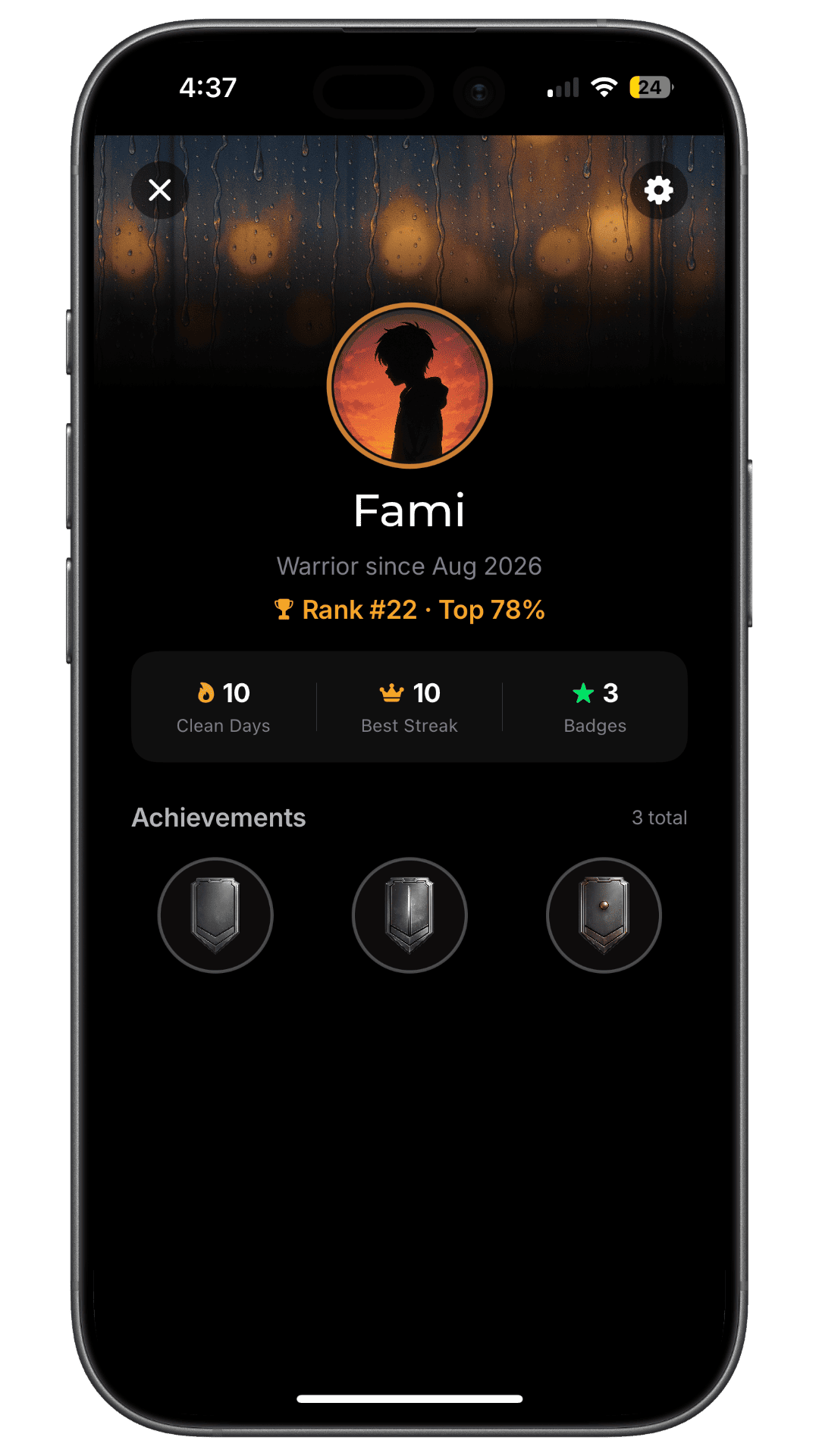
Isolation is the one HAJR does touch, carefully. There is an optional leaderboard where profiles are pseudonymous — people counting the same kind of days you are counting, without names attached. It is there because doing this entirely alone is harder, not because a longer streak makes anyone healthier or better. Participation is a choice, and the page below it is your own profile: your streak, your best streak, the badges you actually earned.
Our complete guide to quitting pornography turns all of this into an ordered plan: mapping your own pattern, changing access, preparing an urge response, and handling a lapse. The blocking side is covered step by step in setting up an iPhone blocker you cannot disable.
What willpower is still for
None of this says intention is useless. It says intention is a poor instrument for the specific moment you have been asking it to handle.
Willpower is excellent at things done in advance and in daylight: installing the safeguard, telling someone, booking the appointment, choosing the longer protection period, getting to bed before the hour when this usually happens. Those are all acts of resolve. They are simply spent where they still buy something.
The shift is from I will resist it when it comes to I will arrange things so it comes less often and finds less waiting for it. That is not giving up on self-control. It is self-control applied with better timing.
When to speak to someone
Talk to a doctor or mental-health professional if you are continuing despite serious consequences, if genuine attempts to stop keep failing, if low mood or anxiety is worsening, or if this is bound up with alcohol or other substances. Compulsive sexual behaviour disorder is a recognised ICD-11 diagnosis and is treatable, and the conditions that commonly accompany it — depression, anxiety, ADHD — are treatable in their own right.
Repeated failure with a self-directed plan is a reason to add support, not a reason to conclude you are beyond help.
Related reading
- Why is it so hard to stop watching porn? — the same ground in plain language, without the studies.
- How to quit pornography: a practical recovery guide
- What porn does to your brain
- Porn addiction signs: when use becomes a problem
- Porn withdrawal: is what you're feeling normal?
- iPhone porn blocker that can't be disabled
Sources
- Ince C, Antons S, Ashton S, Borgogna NC, Brand M, Briken P, et al. Compulsive sexual behavior disorder (CSBD) and problematic pornography use (PPU): a comprehensive, interdisciplinary review. 2026. Notes that etiological models rest "almost exclusively" on cross-sectional data.
- Kampa M, Krikova K, Stark R, Klucken T. Persistent appetitive memory in problematic pornography users. 2026. fMRI conditioning study, 58 heterosexual German men; under-recruited, all male, no ICD-11 diagnosis.
- Coupe N, Peters S, Rhodes S, Cotterill S. The effect of commitment-making on weight loss and behaviour change in adults with obesity/overweight: a systematic review. 2019. Ten trials, 1,320 participants; modest and inconsistent effects, in a different behavioural domain.