

TL;DR
- It is hard for reasons that have nothing to do with how much you want it.
- It is free, instant, endless, and in your pocket. Nothing else you have tried to quit was this available.
- Your attention reaches it before your decision does.
- Every safeguard you set, you can also remove — in about four seconds.
- It is usually doing a job: boredom, stress, loneliness, not being able to sleep.
- Shame makes it worse, not better, and streak counting turns one bad night into total failure.
- Each of these has something you can actually change. None of them require you to want it more.
Disclosure: HAJR publishes this page and makes an iPhone app and a free Chrome extension for exactly these problems. Every feature described below is one we build.
First, the thing worth hearing
If you have decided to stop more than once and are still here, the ordinary conclusion is that you are weak, or you do not really want it.
That conclusion is wrong, and it is worth putting down before you read the rest. What follows is eight reasons this is genuinely difficult. Not excuses — reasons. Every one of them has something you can do about it, and none of them are fixed by wanting it more.
1. It is always there, and it never closes
Think about what you are actually up against. It is free. It arrives in about two seconds. It never runs out. There is no shop to walk to, no person to face, no closing time, no bottle to finish.
Nothing else people try to quit is this available. If alcohol appeared in your hand, free, silently, every time you were bored, quitting drinking would be much harder than it already is.
So the first honest answer is: it is hard because access is close to perfect.
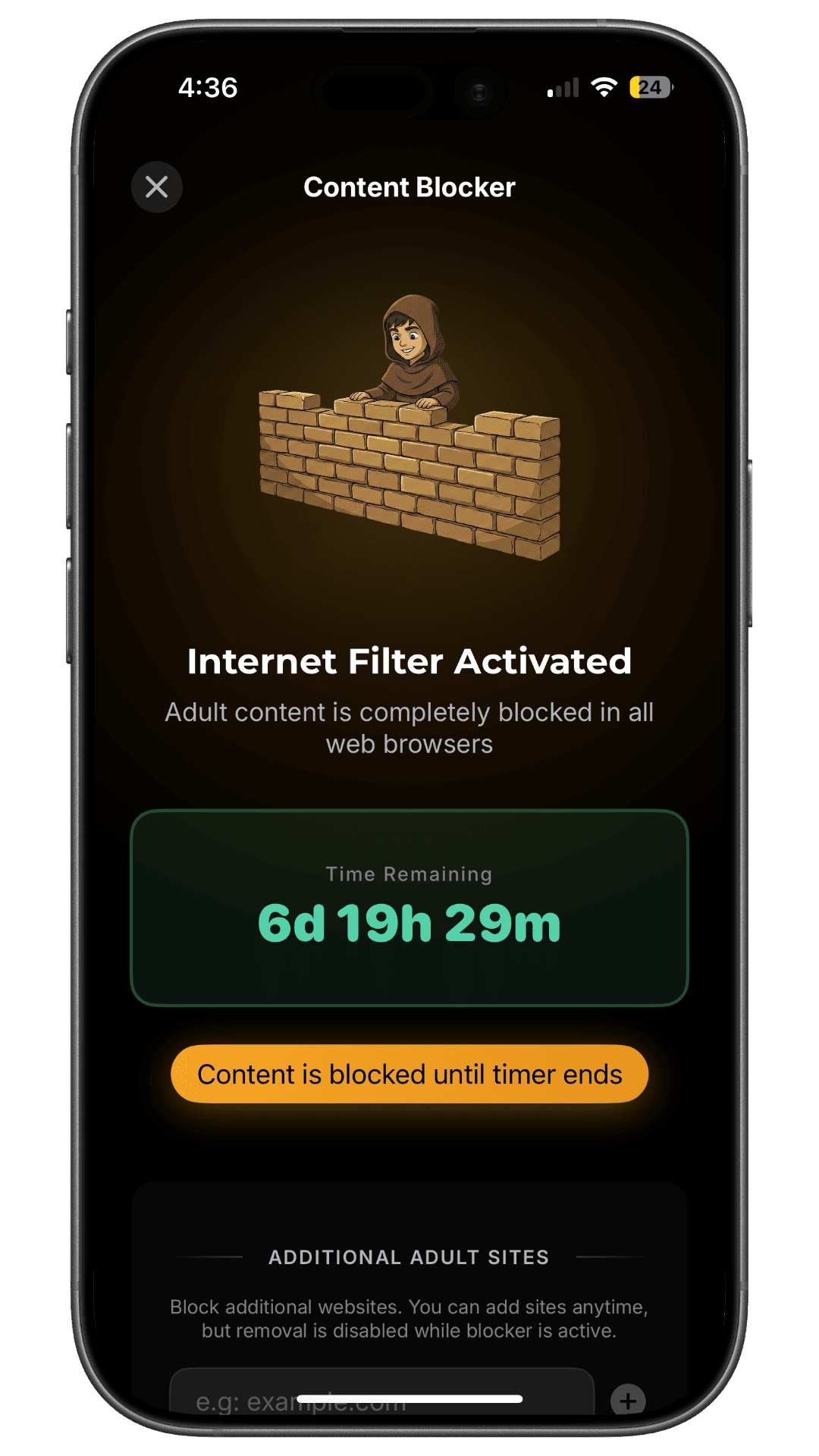
What you can change: make it further away. Not impossible — further. HAJR blocks known adult sites across the browsers on your iPhone with one tap, and you can add your own trigger sites at any time. The point is not that a determined person could never get round it. The point is that the two-second version is gone.
2. Your attention gets there before you do
This is the part almost nobody explains, and it changes how the whole thing looks.
When something has reliably given you a reward, your brain starts noticing anything connected to it faster than it notices other things. Researchers studying people with problematic pornography use keep finding the same pattern: sexual cues grab attention quickly, and the anticipation starts before any thinking happens. A 2026 review of this research describes it as attention being prioritised toward those cues.
In plain terms: by the time the deciding part of you turns up, the wanting already started. You are not losing an argument. You are arriving after it finished.
That is why "I will just resist it next time" keeps failing. It is a plan that only starts working at the moment it has already been beaten.
What you can change: stop relying on protection you have to switch on in the moment. It has to already be running. With HAJR you set it while you are calm — an afternoon, a Sunday, right now — and it is simply in force later, when you would never have chosen to turn it on.
3. You can undo any of it in four seconds
Here is the thing that quietly defeats most people, and it is almost never how they expect to fail.
Nearly nobody outsmarts their blocker. They delete it. Hold the icon, tap remove, done. A careful decision from Sunday afternoon disappears on Tuesday night, and the app you installed to protect you does not argue, because you are the one asking.
Any tool with an off switch is a tool you will switch off. A passcode you chose and can remember is a short delay, not a barrier.
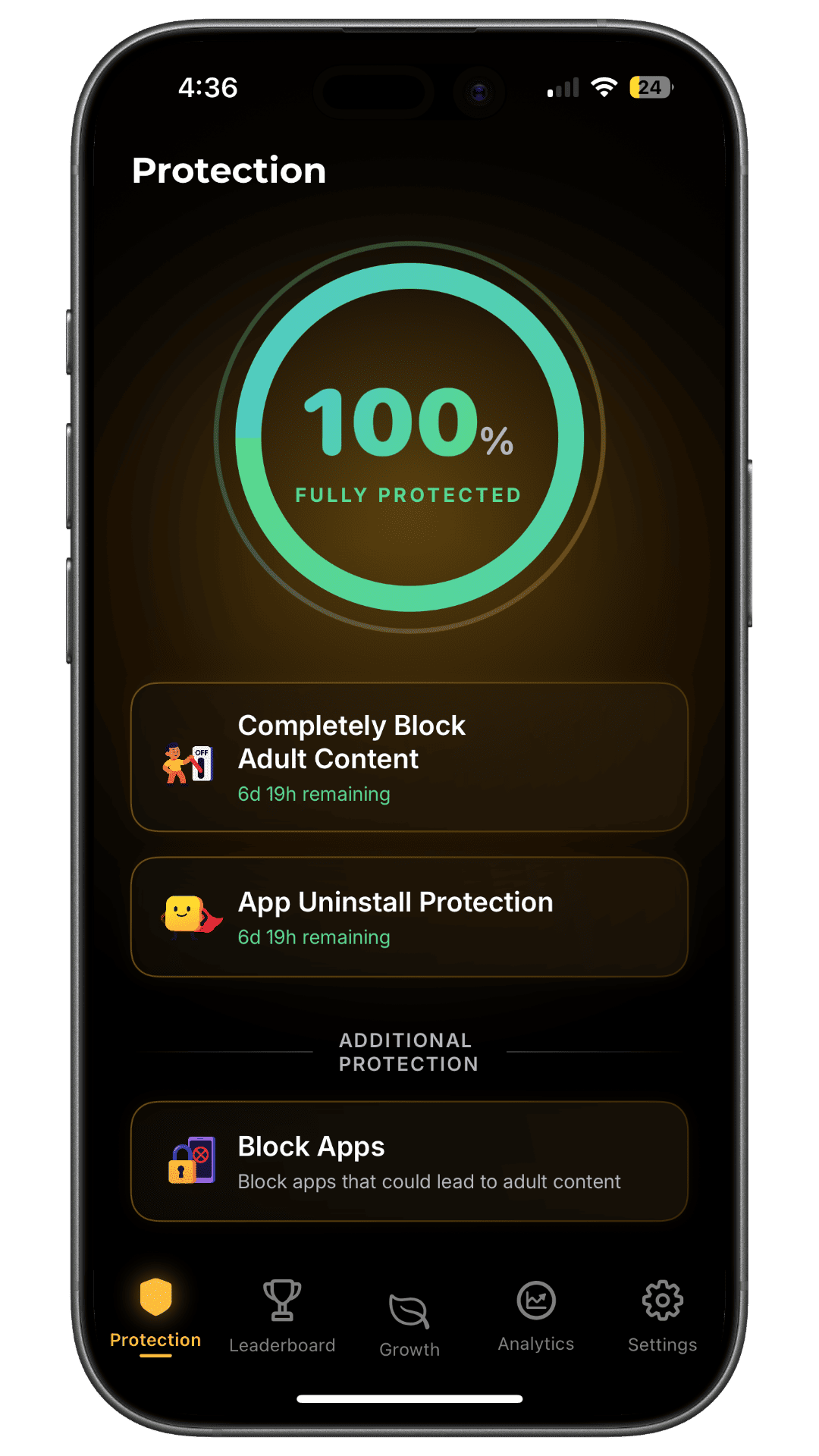
What you can change: use something your later self cannot undo. HAJR's app uninstall protection removes the option to delete the app while it is running. The filter cannot be turned off early either. Both end on their own when your timer runs out — you never have to fight them, and you cannot skip them.
4. It is usually doing a job
Most people are not watching porn because they woke up wanting porn. They are bored, wired, lonely, stressed, avoiding something, or lying awake at 1am.
It is a fast, reliable way to feel differently for a few minutes. That is a real function. And if you remove it without noticing what it was for, the same feeling turns up the next evening with nothing in its place — which is why so many attempts collapse in week two rather than day one.
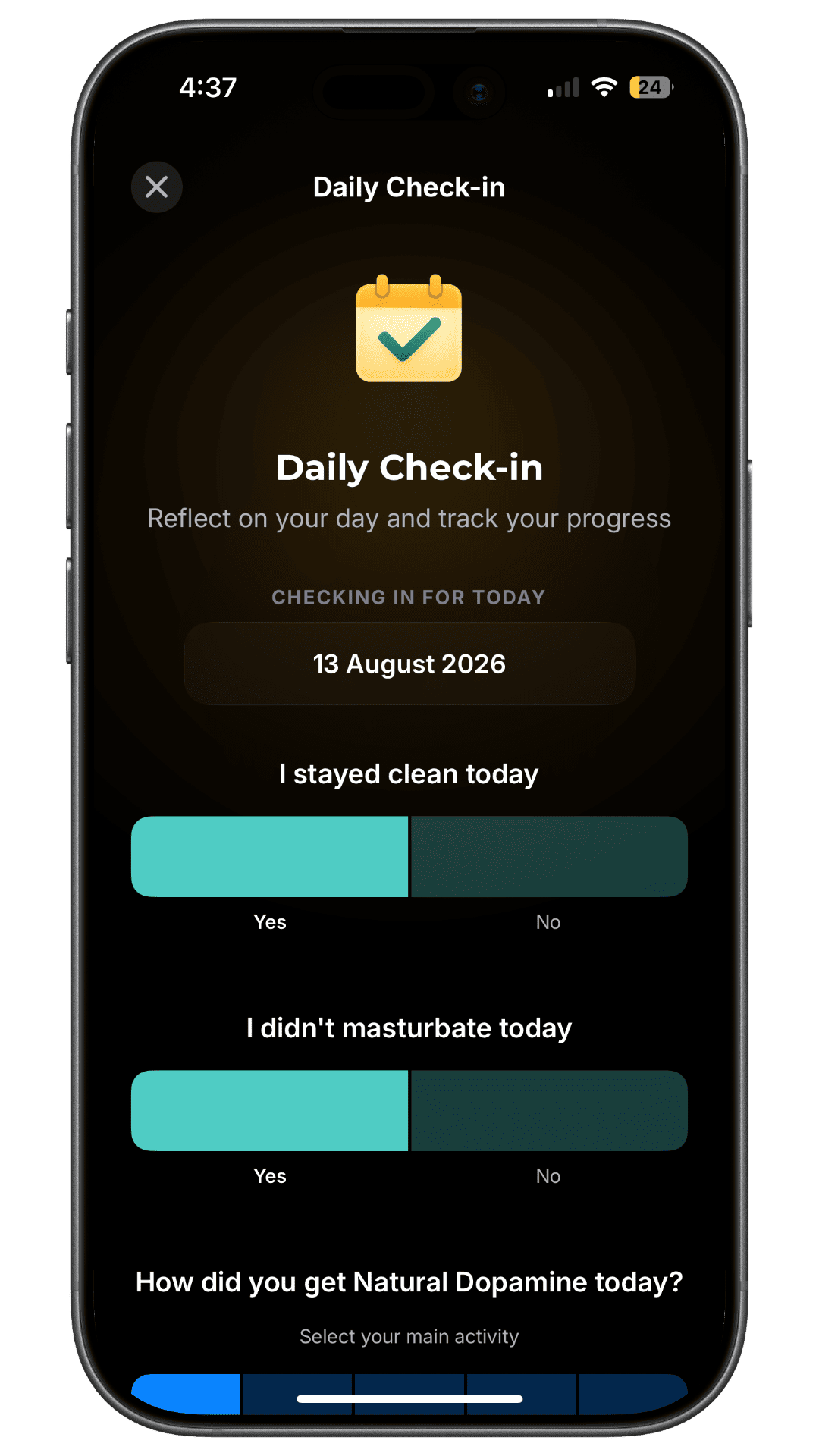
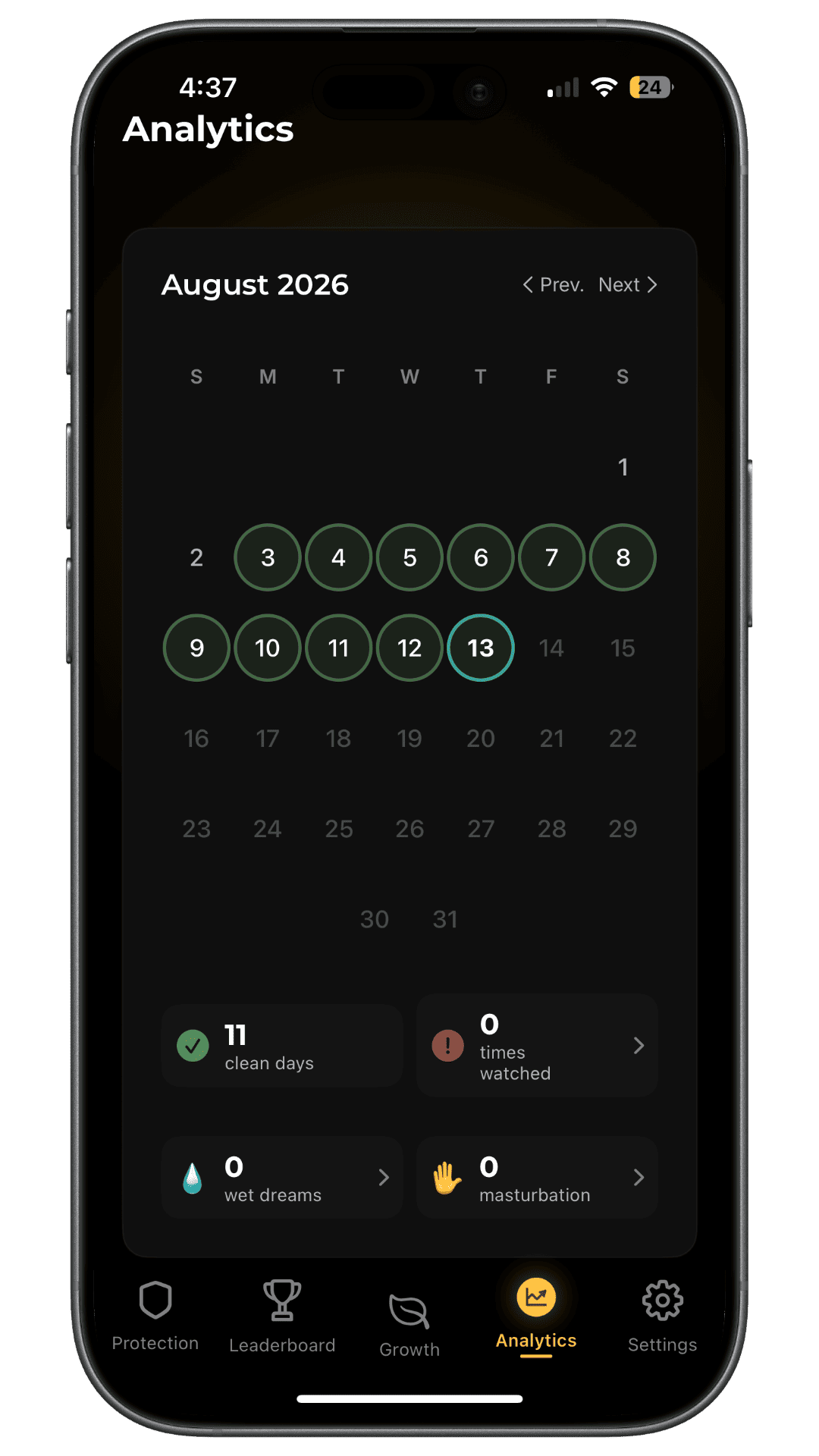
What you can change: find out which job it is doing for you specifically. HAJR's daily check-ins ask what actually happened and what you did instead, and the private calendar shows the pattern over weeks — which days, which times, what was going on around them. After a fortnight you usually stop guessing at your triggers and start seeing them.
5. It is completely private, so nothing outside you pushes back
Most habits collide with the world. Someone notices, it costs money, you turn up late, a person asks a question.
This one does not. Nobody knows. Nothing external interrupts it. All the pressure to stop has to come from inside you, at the exact moment you are least able to supply it.
What you can change: decide how much of that you want to change. Some people want another person involved and it genuinely helps them. If that is you, HAJR's free Chrome extension has optional accountability — a person you choose can be required to approve certain changes, and gets a notification if the extension is removed.
If that is not you, that is fine, and the iPhone app stays entirely self-directed. It does not send screenshots or browsing reports to anyone. Your check-ins and calendar are yours to read. Both are legitimate — what does not work is having neither the internal pressure nor any external friction.
6. It is on every device, and you probably only protected one
People block their phone, feel relieved, and run into it on a laptop three days later.
The phone is where most of it happens, so it is the sensible first move. It is just not the whole surface. And desktop browsing has its own routes: search results, image results, social feeds, short-video feeds that surface things you did not go looking for.
What you can change: cover the other side. The free HAJR Chrome extension blocks known adult sites, takes your own trigger sites, checks and blurs explicit images locally on your own machine, and can turn off short-form feeds — Shorts, Reels, TikTok. Those feeds matter even when nothing on them is pornographic, because they are very good at delivering the kind of cue that starts the whole sequence.
7. Shame makes it stronger, not weaker
This is the loop that keeps people stuck for years.
You watch. You feel disgusted with yourself. Feeling disgusted with yourself is unpleasant. And the fastest, most reliable way you know to stop feeling unpleasant is the thing you just did.
So the punishment feeds the behaviour. People assume they need to feel worse about it to stop. Usually they need the opposite — enough distance from the shame to look at what happened and change something.
There is also a specific version of this worth naming. Some people are not out of control at all: they are doing something at a level that is not damaging their life, which conflicts with their values, and the suffering comes from the conflict. Researchers call this moral incongruence, and it needs a different response than a recovery plan. Our guide to porn addiction signs covers how the two are told apart.
What you can change: stop scoring yourself and start recording yourself. A check-in that notes what happened gives you something to work with. A verdict on your character gives you something to escape from.
8. One bad night feels like losing everything
Streaks are motivating right up to the moment they break. Then a number that took six weeks to build reads zero, and the honest thought is: well, that is gone, so tonight does not matter either.
That thought has probably cost you more days than the original lapse ever did. Six weeks of change did not disappear because of one evening. The counter went to zero. You did not.
What you can change: measure something that a single night cannot erase. HAJR's growth journey counts the days you showed up rather than only the days you were perfect, and your calendar keeps the whole picture — including the harder days, without a lecture attached.
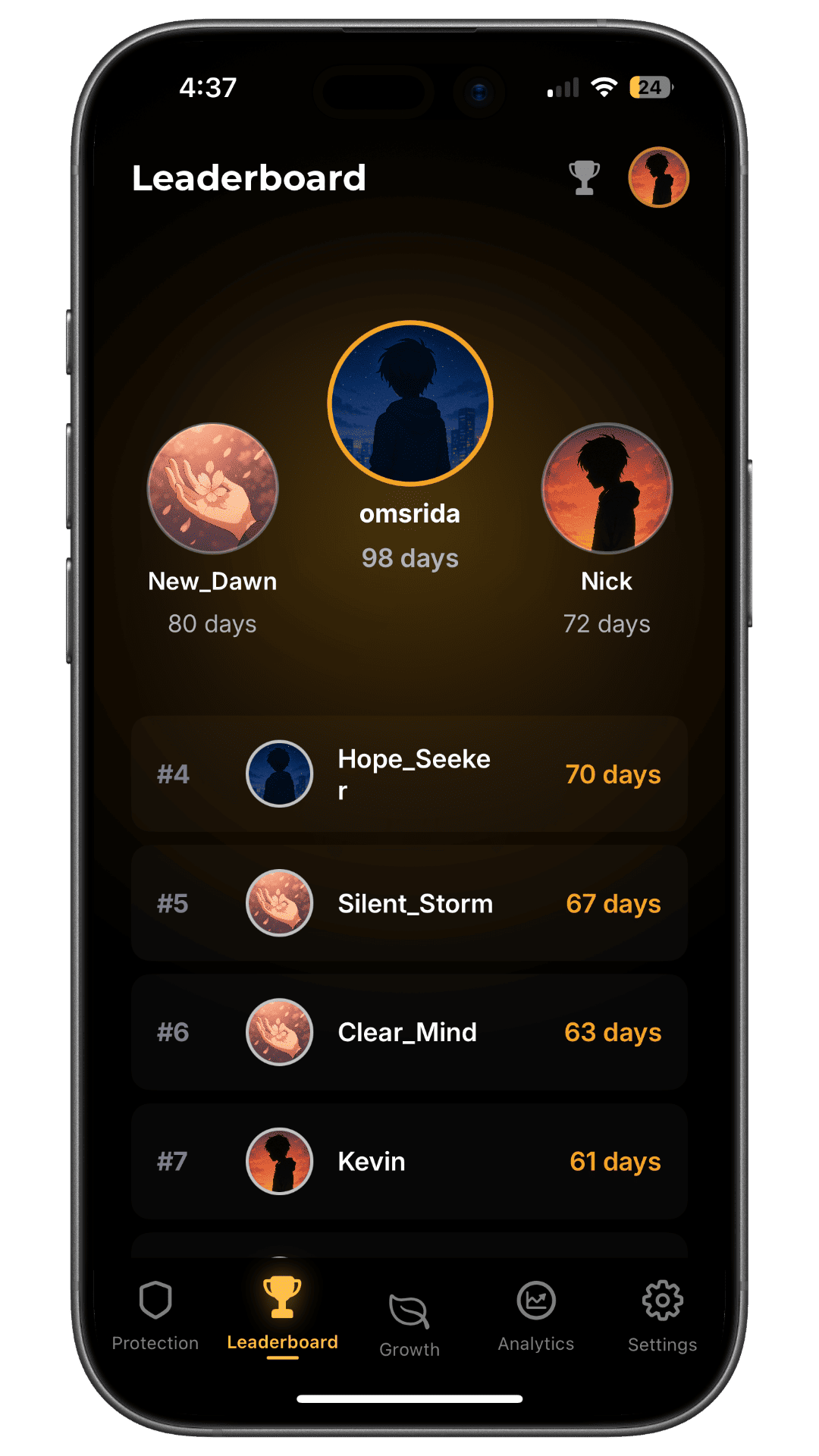
And if isolation is part of it, there is an optional leaderboard where profiles are pseudonymous. It is there because doing this entirely alone is harder, not because a longer streak makes anyone healthier or better than anyone else. It stays off until you turn it on.
So what actually helps
Read back over those eight. Almost none of them are solved by wanting it more, and most are solved by changing something around you rather than something inside you.
The short version:
- Put the block in place now, while it is an easy decision.
- Use something you cannot switch off in the moment.
- Cover the laptop as well as the phone.
- Find out what job it was doing, before you need to know.
- Protect your sleep and your empty evenings — that is where most of this happens.
- Count the days you showed up, not only the days you were perfect.
If you want the ordered version of that, our complete guide to quitting pornography walks through it properly. If you want to understand why deciding on its own keeps failing, why willpower isn't enough goes into the evidence.
And if it stays hard
Some of this is bigger than a blocker and a check-in.
If you are continuing despite serious consequences, if real attempts to stop keep failing, if your mood is getting worse, or if this sits alongside drinking or drugs, speak to a doctor or a mental-health professional. Compulsive sexual behaviour disorder is a recognised diagnosis and it is treatable, and so are the things that often come with it — depression, anxiety, ADHD.
Needing help is not the same as failing. It is the same as it being hard, which is what this whole page is about.
Related reading
- How to quit pornography: a practical recovery guide
- Why willpower isn't enough to quit porn
- iPhone porn blocker that can't be disabled
- Porn withdrawal: is what you're feeling normal?
- What porn does to your brain
Sources
- Ince C, Antons S, Ashton S, Borgogna NC, Brand M, Briken P, et al. Compulsive sexual behavior disorder (CSBD) and problematic pornography use (PPU): a comprehensive, interdisciplinary review. 2026. Source for cue reactivity, attentional prioritisation and moral incongruence. Notes that this research rests almost entirely on cross-sectional data, so it cannot establish what caused what.
- Fernandez DP, Kuss DJ, Griffiths MD. The pornography "rebooting" experience: a qualitative analysis of abstinence journals. Archives of Sexual Behavior. 2021. Source for what people report during abstinence attempts; self-reported and subject to selection bias.
- Coupe N, Peters S, Rhodes S, Cotterill S. The effect of commitment-making on weight loss and behaviour change: a systematic review. 2019. Modest and inconsistent effects, in a different behavioural domain.